Human foods that are dangerous for dogs and cats
Chocolate, grapes, onion, garlic, xylitol, cooked bones and seasoned leftovers can all harm dogs and cats. Here is what to avoid and what to do right away.
Braised pork, fried fish, rice with fish sauce, a plate of sweets: a Vietnamese family meal is hard for a pet to resist, and it is tempting to think one bite will not hurt. In reality, quite a few everyday foods can make dogs and cats sick, and some can damage the kidneys, liver or red blood cells. Based on guidance from animal poison control experts and trusted veterinary references, this article lists the foods to keep away from your pet, including familiar items from a Vietnamese kitchen, and what to do if your pet eats one.
Why human food does not suit dogs and cats
Dogs and cats process many substances differently from people, and some foods harm only one species: cats are more sensitive to onion and garlic, while xylitol is mainly a danger to dogs. Severity also depends on weight, amount eaten and overall health, so there is no "safe amount" to guess at home. Keep the foods below out of reach.
Chocolate, coffee and caffeine
Chocolate, coffee, tea and energy drinks all contain methylxanthines (theobromine and caffeine). A pet that eats them may vomit, have diarrhea, pant, drink and urinate more, become restless, and develop a fast or irregular heartbeat, tremors or seizures. The darker the chocolate and the more cacao it contains, the greater the risk. Cocoa powder and baking chocolate are the most toxic. At home, also watch out for holiday gift boxes of sweets, a forgotten glass of iced milk coffee, coffee grounds, tea bags and energy drinks.
Grapes, raisins and even tamarind
Fresh grapes and raisins can cause acute kidney injury in dogs. The worrying part is that no one can predict which dog will be affected or how much is enough to cause harm, so veterinarians advise treating any grape ingestion as serious. Recent research points to tartaric acid, which grapes contain in high amounts, as the most likely cause. Tamarind is also rich in it, and dogs have developed kidney failure after eating tamarind.
This one is easy to miss: store tamarind sweets, sugared tamarind for Tet and raisin cakes carefully. Data for cats is limited, but do not give these foods to cats either.
Onion, garlic, chives and seasoned leftovers
Onions, garlic, chives, spring onions and leeks belong to the Allium family. They can damage red blood cells and cause anemia. Cats are the most sensitive species, and dogs are at risk too. Raw, cooked, fried, dried and powdered forms are all toxic, and the dried and powdered forms are more concentrated, so they are even more of a concern. Signs of anemia often appear late, a few days later, such as weakness, pale or yellow gums, fast breathing and dark red urine.
This is why leftovers should not go into your pet's bowl: braised meat, soups, porridge with spring onion, meat broth, seasoning powder, instant noodle packets and some jarred baby foods can all contain onion or garlic.
Xylitol in chewing gum and "sugar-free" products
Xylitol is a sweetener found in chewing gum, sugar-free mints and candies, some peanut butters, "diet" baked goods, human toothpaste and even gummy vitamins. In dogs, xylitol can make blood sugar drop very quickly, sometimes within about 30 minutes, and can cause liver injury one to two days later. Signs include vomiting, weakness, wobbly walking, lethargy and seizures.
According to the Merck Veterinary Manual, dogs are the only domestic species in which xylitol poisoning has been reported, but these products are not for cats either. Check the label on anything "sugar-free" and keep it, and handbags with gum inside, away from your pet.
Alcohol and raw dough
Beer, rice wine, herbal liquors and dishes cooked with alcohol are absorbed very quickly, and pets may vomit, lose coordination, struggle to breathe, tremble or even fall into a coma. Raw yeast dough for bread or steamed buns keeps rising in the warm stomach, causing painful bloating, and the yeast also produces alcohol. In dogs, a stretched stomach can twist, which is a serious emergency.
Cooked bones, fatty food and salty food
Cooked chicken, fish and rib bones splinter into sharp pieces that can cause choking, cut the mouth, throat or gut, or cause a blockage. Keep table bones away from your pet and use a bin with a lid.
Fatty foods such as pork fat, chicken skin, banh chung, fried snacks and oily nuts can cause vomiting, diarrhea and, in some pets, pancreatitis. Macadamia nuts in particular can cause weakness in the legs, tremors, vomiting and fever in dogs. Very salty foods such as fish sauce, salty braised dishes, dried squid and salty snacks make pets thirsty and urinate more, and larger amounts can cause vomiting, tremors and seizures.
Milk, avocado and foods that seem harmless
Many people still give cats cow's milk, but most adult dogs and cats do not digest lactose well and can get diarrhea. Avocado is mainly dangerous for birds, rabbits and horses. For dogs and cats, the bigger risks are the pit, which can cause choking or a blockage, and the skin and leaves, which can upset the stomach.
Beyond food, cat owners should be careful with lilies over Tet. A cat that only licks the pollen or drinks water from a lily vase can develop kidney failure. See the article on keeping dogs and cats safe during Tet to get your home ready before the holidays.
What to do if your pet eats something dangerous
Stay calm and follow these steps:
- Move your pet away from the food, put the rest away and check any other pets.
- Keep the packaging and leftovers, or take a photo. Note what your pet ate, when, and roughly how much.
- Call your vet clinic right away, even if your pet seems fine. Many toxins, such as grapes, onion, garlic and xylitol, cause harm hours or days later, and early treatment is usually easier.
- If your pet has a seizure, struggles to breathe, collapses, becomes very weak or keeps vomiting, go to the nearest clinic immediately and bring the packaging.
- Do not make your pet vomit at home, and do not give salt, cooking oil, milk or any home remedy unless a vet tells you to. With some substances, inducing vomiting the wrong way makes things worse.
Save the numbers of your regular vet and a nearby 24/7 clinic in your phone. At the clinic, open your pet's health profile in the PetID app, with vaccine records and vet history, so the vet sees the background quickly. For other emergencies, read first aid for a pet that nearly drowned.
How to give treats safely
Safer ways to reward your pet:
- Treats made for dogs or for cats, sized for your pet's mouth.
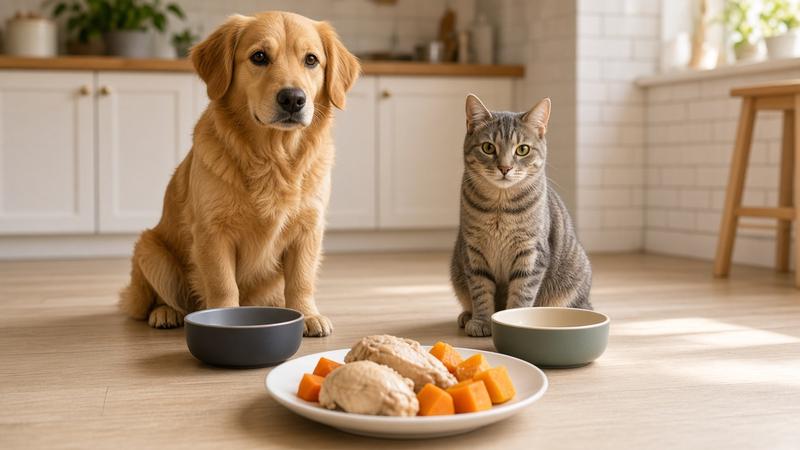
- Plain boiled chicken, lean pork or fish, with all bones and skin removed, and no salt, onion, garlic or seasoning.
- A little boiled carrot, green beans or pumpkin, cut small to avoid choking. Vegetables suit dogs better, while cats should mostly get meat or fish.
The World Small Animal Veterinary Association (WSAVA) advises keeping treats under 10% of daily calories, never replacing a complete and balanced diet. If your pet has a health condition, is overweight or is on a prescribed diet, ask your vet first.
Finally, ask everyone at home, especially children and guests, not to feed your pet from the table. New to pets? See the checklists for bringing a new dog or cat home and getting your first cat.
Sources: ASPCA Animal Poison Control, Merck Veterinary Manual, Cornell University College of Veterinary Medicine, AKC, WSAVA.