Keeping reptiles: heat, UVB and what new owners often miss
Reptiles depend entirely on the enclosure you build. How to create a heat gradient, choose and replace UVB lamps, manage humidity and avoid beginner mistakes.
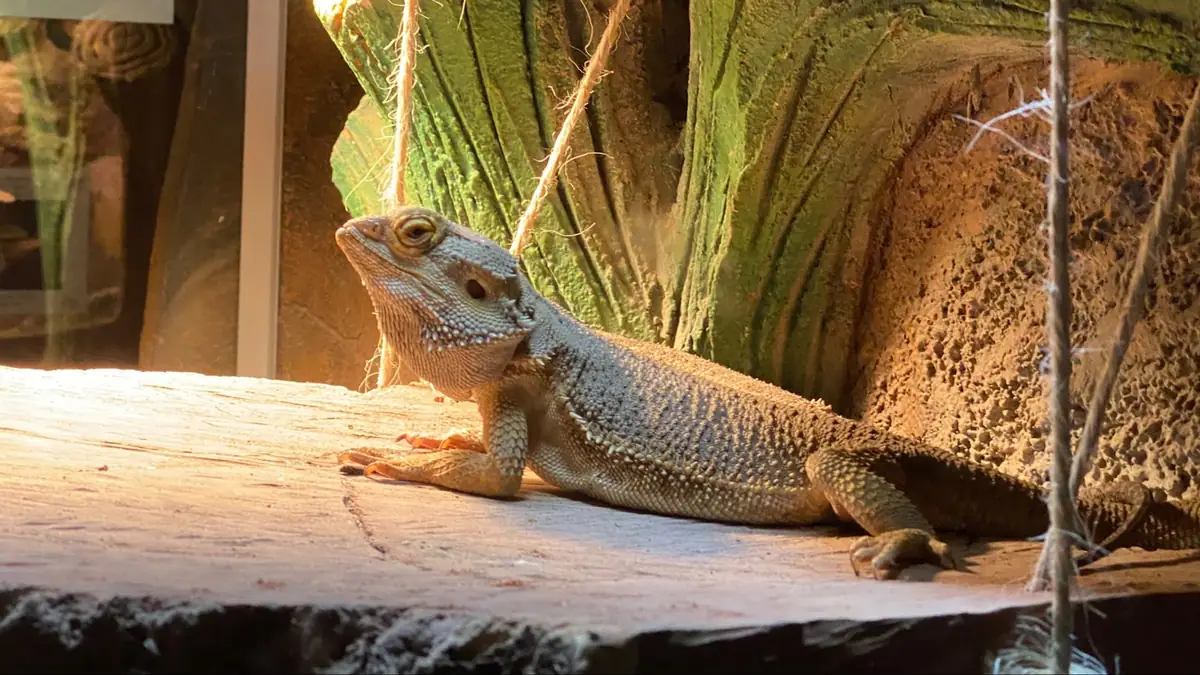
Bearded dragons, leopard geckos, turtles and pet snakes are becoming popular with young pet owners in Vietnam. Reptiles are quiet and do not need walks, but they depend entirely on the environment you create for them. They are ectotherms, which means they use their surroundings to warm up and cool down. According to the RSPCA and VCA, many health problems in pet reptiles come from the wrong temperatures, missing UVB lighting or an unsuitable enclosure. This guide covers the basics and the mistakes new owners most often make.
Research the exact species and buy from a legal source
Each reptile species needs different temperatures, lighting, humidity and food. There is no one-size-fits-all setup, so before you buy, find out the exact species, its adult size and its lifespan.
Many reptile species are protected by law, and taking animals from the wild harms wild populations. Buy only captive-bred reptiles from sellers with clear documentation of origin, and avoid wild-caught animals or animals of unknown origin.
The RSPCA advises setting up and running the enclosure for at least a week before your reptile arrives, so you have time to adjust heat, lighting and humidity. It is the same idea as preparing for a new dog or cat: have everything ready first, so your new pet only has to settle in. For one adult bearded dragon, the RSPCA recommends a minimum enclosure of 120 cm long, 60 cm high and 60 cm deep, well ventilated, secure and easy to clean.
Heat: a gradient, not a single number
Reptiles need to move between warm and cool areas to control their body temperature. The enclosure therefore needs a hot basking end and a cooler end with a hide. For bearded dragons, the RSPCA recommends:
- Hot basking end: about 38–42°C.
- Cool end: about 22–26°C.
- At night, not below about 20–22°C.
These figures are for bearded dragons. Leopard geckos, turtles and snakes need different ranges, so look up the needs of your species and ask your vet.
Some general rules:
- Use a thermostat on every heat source and check the temperature at both ends of the enclosure every day.
- Fit a guard around heat lamps so your reptile cannot get burned.
- If extra heat is needed at night, use a ceramic heater that gives off no light, so the day-night rhythm is not disrupted.
In Vietnam, summer heat can make an enclosure far too hot, especially near a sunny window. Keep the enclosure away from direct sun and other heat sources, and check that the cool end really is cool and your reptile always has a place to escape the heat. Winter nights in northern Vietnam can be the opposite problem and get colder than your reptile needs.
UVB lighting: what new owners miss most
VCA explains that many reptiles need UVB light to make vitamin D3 in their skin. Without vitamin D3, the gut cannot absorb calcium from food. Over time this leads to metabolic bone disease (MBD), a common condition in pet reptiles that can be fatal if not caught early. VCA notes that even leopard geckos, which are active at twilight, increase their vitamin D levels with UV exposure.
What to remember about UVB lighting:
- Regular household bulbs and many "full spectrum" bulbs do not provide UVB. You need a dedicated reptile UVB lamp.
- Glass and plastic block UVB. Sunlight through a window or through the glass of the enclosure does not help, according to the Royal Veterinary College (RVC).
- Mount the lamp at the distance the manufacturer recommends. Too far away and it does nothing, too close and it can damage the eyes and skin.
- UVB output fades over time even while the lamp still looks bright. The RVC says some lamps need replacing every 3–6 months and others every 6–12 months. Follow the manufacturer's schedule, or measure with a UVB meter.
- Keep a steady day-night cycle. For bearded dragons, the RSPCA suggests about 12 hours of light and 12 hours of darkness, which a plug-in timer makes easy.
Signs of metabolic bone disease include muscle twitching, swollen legs and fragile bones, and later the limbs, jaw, spine or tail may become permanently deformed. If you see these signs, see a vet early. Use calcium and vitamin powders only as directed on the pack or by your vet, as the RSPCA notes that vitamins and minerals can also be over-supplied.
Humidity in a humid climate
Each species needs a different humidity level. Bearded dragons come from dry habitats, and the RSPCA recommends about 30–40% humidity at the cool end. In Vietnam, especially during the damp season, indoor humidity is often much higher, so the enclosure needs good ventilation and a hygrometer to keep track. Other species need higher humidity to shed properly. Again, follow the needs of your exact species.
Common mistakes new owners make
- An enclosure that is too small or has only one temperature.
- Calcium sand or loose substrates such as bark chips. The RSPCA warns that these can cause a gut blockage if swallowed.
- Keeping your reptile out of its enclosure too long, so its body temperature drops. The RSPCA suggests about 10–15 minutes at a time for bearded dragons.
- Letting it mix with dogs and cats, or roam the house unsupervised.
- Forgetting hygiene. Reptiles can carry Salmonella, so wash your hands before and after handling your reptile or cleaning the enclosure, remove droppings as soon as you see them, and do not clean reptile equipment in the kitchen sink. Young children should be supervised by an adult.
Finding a reptile vet
Reptiles often hide illness for a long time. Watch for loss of appetite, weight loss, incomplete shedding, abnormal droppings, open-mouth breathing or lethargy even when the enclosure temperatures are right. Never medicate your reptile yourself. Find a vet experienced with exotic pets and reptiles before you need one, and call ahead. The Association of Reptile and Amphibian Veterinarians (ARAV) has a vet directory on its website. For the trip, use a well-ventilated carrier, keep it suitably warm and never leave it to overheat in the sun.
Keep a record of weight, shedding dates, UVB lamp changes and vet visits. You can store these in your pet's profile in the PetID app. To learn more about keeping health records, see our article on digital vaccine and health records for pets. If you also keep birds, read our guide to healthy pet birds.
Sources: RSPCA – Bearded dragons, VCA – Lighting requirements for reptiles, Royal Veterinary College – Reptile light and heating options, CDC – Reptiles and amphibians, Association of Reptile and Amphibian Veterinarians (ARAV).