5 tips to train dogs and cats at home
Train your dog or cat at home in short daily sessions: sit and come, house training without punishment, clicker work for cats and walking on a loose lead.

Short, fun and repeated every day
Training sessions of 3–5 minutes, two or three times a day, work better than one stressful hour. Stop while your pet still wants to play. Reward with small treats or praise, never with scolding.
Sit and come: the two foundation commands
Sit: hold a treat just above the nose, and reward the moment the bottom touches the floor. Come: call your pet's name plus a signal, and reward as soon as they move towards you, even just a few steps. Practise indoors first, then in the yard.
House training without punishment
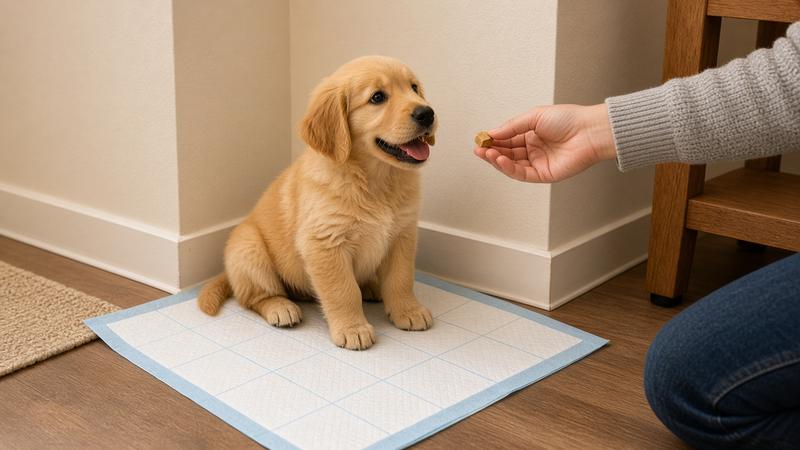
Take your pet to the same spot after meals, after naps and after play. Praise them when they get it right. If there is an accident indoors, clean it with an enzyme cleaner and never push your pet's nose into it. That only teaches them to fear you, not to understand the rule.
Cats can be trained too
Use a clicker or a short "click" sound and soft treats. Teach litter box use and getting onto the table for nail trims one small step at a time. Do not spray water as a punishment, as it easily breaks your cat's trust.
Leash walking without pulling
Get your pet used to the collar and leash indoors first, and reward them for walking beside you with a loose leash. When they start to pull, stop and stand still. Wait for the leash to go slack, then step forward again and reward straight away. Changing direction unexpectedly also helps your pet pay attention to you. Avoid jerking the leash or shouting, keep sessions short and build up the time once your pet is comfortable.
How short should each session be?
A few minutes, one task, then a break. A slightly hungry pet pays more attention than one who has just eaten a big meal. End the session while your pet still wants to play, not when they have already wandered off to lie down.
Pick one word for each action, and make sure everyone in the house uses the same word. If the word changes every day, your pet cannot tell what you are asking. Write the words down in the PetID app so whoever feeds your pet while you are away does not train it differently.
A QR tag is not a training tool, but it should still be on the collar when you go outside. Training and getting lost are two separate problems. The tag takes care of the second one while you focus on the first.
When your pet does not listen, what should you check first?
Is your pet in pain, very hungry, or distracted by an unfamiliar noise? Do not increase punishment. Go back to a quiet spot and repeat something they managed the day before.
The reward has to come immediately after the right action, not after a sequence only you understand. If your pet does not get it, make the request smaller: a single step towards you counts, and you can ask for more distance later.
Practise name recall at home before trying it in the park. Only use a long line outdoors once recall is reliable in the yard. A busy park is the test, not the place to teach from scratch.
Where should you practise sit and come first?
Indoors, on a floor that is not slippery, with few visitors around. Ask for "sit" once your pet is already looking at you. Give small rewards often rather than one big treat that ends the session. Start "come" from one metre away, then two, still in the same room.
Move to the yard once things are consistent indoors, and to the street once the yard is consistent. Skipping these two steps is why many owners think their pet is "stubborn" at the park.
Everyone in the household should reward the same way and use the same word. Young children should only train with an adult beside them, and should never hold treats out of reach to tease.
What does house training without punishment mean?
Take your pet out at the right times: after sleeping, after eating and after playing. Praise them on the spot when they go in the right place. Clean up mistakes without shouting, because a telling-off a few minutes later means nothing to your pet.
While habits are still forming, limit the area your pet can roam with doors or an open crate during the day while someone is watching, never locked up all day. Give them more space after a few days without accidents.
If several people share the care, log toilet times in the app notes. The next person knows whether your pet has already been out, so they are not left holding on too long and then going in the wrong place.
Where do you stand when teaching loose-leash walking?
Keep the leash loose, change direction when your pet pulls, and never yank it back. Start in a yard or a quiet corridor. Reward when the leash is slack, never when it is tight.
The training collar should fit well and be no tighter than the collar that carries the tag. If you use a harness, the QR tag should still be visible at the front. If the leash gets tangled around the tag, untangle it before you set off, so your pet is not pulling because they are caught, rather than because they do not understand. For fit and sizing, see our guide to choosing a dog or cat collar.
End the session while your pet can still manage a few steps on a loose leash. Five steady minutes beat twenty minutes of tug-of-war.
What changes when you have guests?
Move the session to a quiet room or wait until the guests leave. Unfamiliar sounds make it hard for your pet to hear the right word, and you may wrongly think they need longer training. A few minutes once the house is quiet again is enough.
Guests do not need to teach new commands. If they want to give a treat, they should use the word written in the app, give a small reward, and do it once. Several people calling in different ways during one session is how "come" stops working.
Before opening the door to guests, check that the collar and QR tag are on if your pet tends to slip between people's legs. Good manners do not replace a tag. An open door is still when pets disappear fastest. If you are just starting out with a new pet, our new pet homecoming checklist and first cat guide are good next reads.