Bitten again after rabies shots: do you need another vaccination?
Already finished rabies PEP then bitten again — do you need more shots? First aid, when to see a clinician, and pet rabies vaccination duties. General information only — not human medical advice.

People often search "bitten again after rabies vaccine", "need another PEP after dog bite", or "rabies booster after second bite" when they already finished (or are finishing) post-exposure shots and get bitten again by a dog, cat, or suspect animal. This is a human medical question — whether you need boosters is decided by a clinician / vaccination center, not by reading an article.
On the pet side: household dogs and cats must stay on a rabies vaccine schedule with records kept — that is an owner duty and lowers risk for the family and community.
Strong disclaimer: General public-health information only (WHO-style / common immunization guidance). Not a prescription and not a substitute for a doctor, commune health station, or hospital. Do not skip care on your own and do not assume "washing the wound is enough". Suspected rabies exposure — seek medical care promptly. Vet notes here are also general, not a substitute for a veterinarian.
Right after a dog/cat bite (for people)
- Wash the wound right away under running clean water and soap for several minutes (often about 15 minutes when practical); use antiseptic as a clinic advises.
- Do not apply folk remedies, leaf poultices, or "suck the wound", and do not ignore a small nick.
- Go to a clinic / immunization point for exposure assessment (wound depth and site, animal type, animal status, your vaccine history).
- If you know the owner: ask for the pet's rabies certificate; report the bite per local rules when needed.
- Keep the wound clean; watch for swelling, pain, or pus — clinicians may also address tetanus or antibiotics case by case.
This article lists no prices and does not promise "X shots are enough" for everyone.
Already vaccinated, bitten again — more shots?
Short answer (not absolute): A later bite / exposure still needs a clinical reassessment. Common public guidance distinguishes:
- Pre-exposure vaccine (PrEP) for occupational risk ≠ post-exposure prophylaxis (PEP) after a bite or saliva contact with wounds/mucosa.
- If you already completed PEP, a new exposure often does not restart the full first-time schedule — some protocols use booster doses only as directed. Only a clinician / immunization center decides dose count, vaccine type, and whether rabies immunoglobulin is needed.
- If a course is incomplete, or you lost records / forgot dates — bring every paper you have; do not stop mid-course on your own.
- Clinicians weigh: time since prior doses, exposure type, the animal's vaccine status (vaccinated? observable?), wound site (head–neck–hands…), and your health.
This is not a promise that "once vaccinated, later bites need nothing". Clinical rabies is almost always fatal once neurologic signs appear — missing care is riskier than controlled extra doses.
Bring: old shot cards if any, wound photos, animal details (breed, behavior, pet vaccine record).
Household pets: rabies shots are an owner duty
Most exposures link to animals at home or nearby. Owners should:
- Keep dogs and cats on rabies vaccines per the vet / local rules (primary series and boosters).
- Keep the certificate / booklet ready — useful if a pet bites someone or animal-health officers ask.
- Avoid free-roaming; limit contact with strange dogs / wildlife acting oddly.
- If a pet bites a person: follow local observation rules; do not decide that "our pet is vaccinated so the bitten person can skip care".
See the dog vaccine schedule for the broader core timeline (rabies is often required by region).
More FAQ
Tiny nick / only a scratch — still go?
Yes — let a clinic classify the exposure. Do not self-rank it as "too mild to bother".
Pet already vaccinated — can the person skip shots?
Do not self-exempt. The animal's vaccine status is one input; the human clinician still decides.
Does rabies vaccine replace tetanus shots?
No. Tetanus / wound infection risk is assessed separately.
How late is too late after a bite?
Go as soon as you can. Do not wait for symptoms — once clinical rabies appears, specific treatment almost never works.
Does PetCare pay for human rabies shots?
No. PetCare is vet cost support at partners — not insurance, and not human medical coverage.
How PetID helps
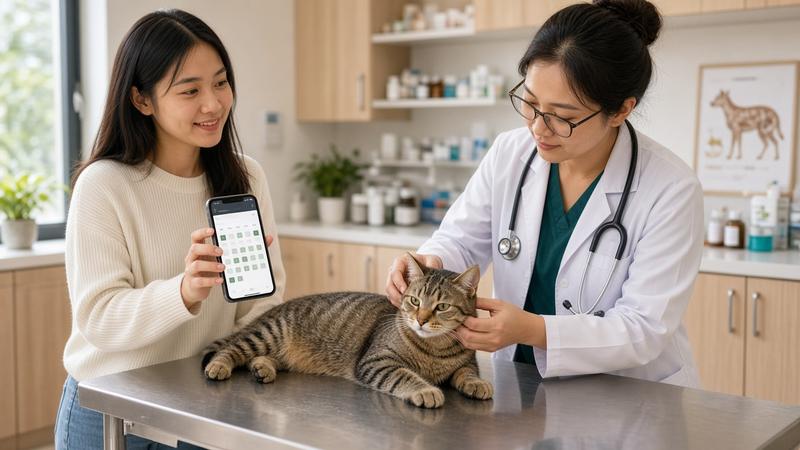
- Store pet rabies dates / certificates in a digital profile for quick proof.
- Reminder cycles via partner settings / records (alongside other vaccines).
- Book a vet visit online to update pet vaccines or check animals after bite–scratch incidents.
- Learn about PetCare cost support if a vet advises exams or observation (cost support — not insurance).
PetID does not replace human immunization clinics and does not prescribe your PEP schedule.
Key takeaways
- Bitten again after prior rabies / PEP care: still get a clinician reassessment; many cases use boosters only, but do not skip on your own.
- Wash at once; no folk remedies; bring old shot records if you have them.
- Owners: keep dogs/cats on rabies schedules and store certificates in PetID — lower household risk.
- No absolute "no more shots" claim; no prices; not a substitute for human or vet care.
Create a PetID profile to store rabies certificates and book vaccine updates on time.