Cat urinary blockage: signs, emergency care and prevention
Signs of cat urinary blockage or stones, when it is an emergency, aftercare, and how to lower recurrence — general information only.
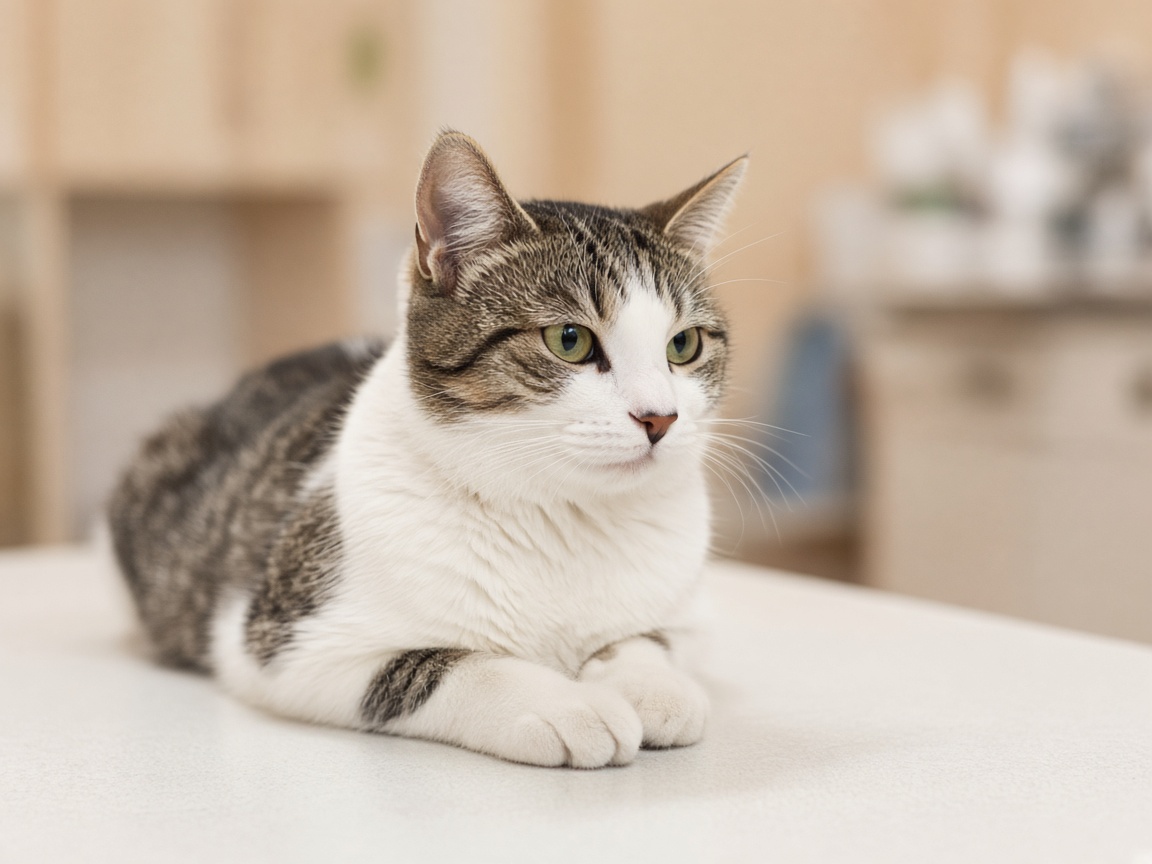
Many owners search "cat urinary blockage", "cat can't pee", or "cat bladder stones" when a cat visits the litter box often but produces little or no urine, cries, or licks under the belly. Urinary obstruction (especially in male cats) can be an emergency: a blocked urethra means urine cannot leave, and the kidneys and whole body can fail quickly.
Note: This article is for general information only and does not replace a vet diagnosis. If your cat strains with no urine, has a firm belly, won't eat, or vomits — go to a vet clinic immediately. Do not wait overnight, and do not give human diuretics.
What is urinary blockage in cats?
Urinary obstruction happens when the urethra is blocked — often by a mucus plug, crystals/small stones, inflamed lining, or spasm. Male cats have a longer, narrower urethra, so they obstruct more easily than females. This sits within lower urinary tract disease in cats (FLUTD / FIC — idiopathic cystitis, stones, infection, and related issues).
True blockage is not the same as peeing less from low water intake or a dirty litter box: the bladder fills and the cat cannot empty urine. It is not a "wait a few hours" problem if the cat has strained repeatedly with no output.
Commonly discussed factors include low water intake (dry-food-heavy diets), stress, dirty or too-few litter boxes, obesity, low activity, and in some cats a tendency toward crystals (struvite, oxalate) as assessed by a vet.
Warning signs of a blocked cat
Common signs (which can overlap with non-obstructive cystitis):
- Visiting the box repeatedly, straining long, with no urine or only drops.
- Crying while straining; licking the penis / belly a lot.
- A firm, tense lower belly on gentle touch (do not press hard at home).
- Appetite loss, lethargy, hiding; sometimes vomiting.
- Peeing outside the box, bloody urine (pink/red) — also seen in non-blocked cystitis; still see a vet.
- Late stage: weakness, wobbly walk, rapid breathing — emergency.
Do not self-diagnose from observation alone. Other issues (constipation, joint pain, cat vomiting, kidney disease) can also change litter habits. Only a vet can assess the bladder and how urgent the case is.
When is it an emergency?
Seek same-day emergency care within hours if any of these apply:
- Repeated straining with no urine produced.
- Tense lower belly plus appetite loss / vomiting.
- A male cat with prior FLUTD / blockage history straining again.
- Weakness, rapid breathing, or collapse.
Do not: wait "a few more hours", massage the belly hard, give human diuretics or antibiotics, or try to catheterize at home. Relieving a blockage is clinic-only under sedation/anesthesia as the vet directs.
After unblocking, vets often monitor electrolytes and kidney values, give fluids, and advise diet / stress reduction to lower recurrence risk. This article does not list prices or promise outcomes.
Care and lowering recurrence risk
Once the vet has stabilized the cat, care often focuses on:
- Water: multiple clean bowls; a fountain if they like running water; more wet food if advised.
- Litter boxes: enough boxes (often n+1 for n cats), kept clean and in quiet spots — also relevant to cats toileting outside the box.
- Lower stress: hiding places, stable routines, fewer cat conflicts.
- Diet: switch to a urinary-support formula only when the vet recommends it; avoid extreme DIY protein restriction.
- Monitoring: log pee frequency, urine color, and weight for rechecks.
- Do not stop medicines or diet mid-course if the vet is treating inflammation or tracking crystals.
Keeping kitten vaccine and deworming schedules supports overall health; vaccines do not replace FLUTD prevention but reduce concurrent disease.
FAQ
Can female cats get blocked?
Yes, but males obstruct far more often because of a longer, narrower urethra.
Does bloody urine mean the cat is blocked?
Not always. Blood can appear with non-obstructive cystitis. Still see a vet; if the cat strains with no urine, treat it as an emergency.
Will more water clear a blockage by itself?
No. Once there is a mechanical plug, extra water cannot push it out; a vet must relieve it.
Does it spread to people or dogs?
Idiopathic cystitis / crystal–mucus plugs are not a human contagious disease. Bacterial UTI is less common in young cats; antibiotics are used only when the vet indicates.
How PetID helps
- Digital health records for prior blockage / cystitis notes, diet, recheck dates, and urine photos if your vet wants monitoring.
- Book a vet visit online at partner clinics for unusual straining — if blockage signs appear, go to emergency care now, do not wait for a distant slot.
- Learn about the PetCare cost-support plan when catheterization or a short stay may be needed (cost support at partner clinics — not insurance).
Key takeaways
- A male cat straining with no urine is an emergency — do not wait overnight.
- Blockage often ties to FLUTD / mucus–crystal plugs; only a vet should unblock and stabilize electrolytes and kidneys.
- No human medicines and no home catheterization.
- Aftercare: more water, clean litter, less stress, vet-guided diet to lower recurrence.
- Logging history in PetID helps you and the vet act faster next time.
Create a PetID profile to track urinary health and book care when you need it.